📖 What's in This Guide
⚠️ IMPORTANT: Most 1974 Pennies Are Worth 2 Cents — But Check Yours Carefully
The 1974 penny was minted at three facilities with a combined output exceeding 8.8 billion coins — making most examples worth only their copper melt value of about 2–3 cents. But buried in that enormous mintage are doubled die errors worth hundreds, a D/S over-mintmark worth $2,000+, and the legendary aluminum experimental cent that could be worth $2,000,000 — though owning one is illegal.
How to Identify a 1974 Lincoln Memorial Penny:
- ✓ Lincoln portrait on the obverse (front) — designed by Victor D. Brenner
- ✓ Date "1974" to the right, mint mark directly below date
- ✓ Mint mark location: below the date — no mark = Philadelphia, "D" = Denver, "S" = San Francisco
- ✓ Lincoln Memorial on the reverse (back) — designed by Frank Gasparro
- ✓ Composition: 95% copper, 5% zinc — reddish-brown color, weighs 3.11 grams
- ✓ Diameter: 19.05 mm, plain edge, thickness 1.52 mm
1974 was one of the last years of the traditional bronze composition — all pre-1983 pennies are 95% copper and worth at least their metal content.
The 1974 Lincoln cent sits at a fascinating crossroads in American coinage history. Copper prices had surged, the Mint was secretly experimenting with aluminum replacements, and billions of coins poured out of Philadelphia and Denver — creating fertile conditions for minting errors that still turn up in pocket change today. Understanding 1974 penny value means knowing the difference between a common 2-cent copper piece and a potentially life-changing error coin.
From the 1974-S proof cent struck at San Francisco to the elusive D/S over-mintmark and the notorious aluminum experimental penny — this guide covers everything you need to know.
"In 1974 the Mint struck 8.8 billion pennies — and quietly tested over a million aluminum ones that Congress never approved. Most of those were recalled and destroyed. The few that survived are now worth more than a house."
The 30-Second 1974 Penny Quick Check
Before you get excited — or disappointed
The 1974 Penny Traffic Light System
Red = Worth face value (2–3 cents)
Circulated copper penny, no errors — common as dirt, but still worth more than its face value in copper
Yellow = Worth investigating ($3–$100)
Uncirculated high-grade (MS65+), S-mint proof, or minor error like BIE or small die crack
Green = Jackpot potential ($200–$2,000,000+)
Major DDO/DDR, D/S over-mintmark, wrong planchet, or the legendary aluminum cent — do NOT spend
Table 1: 1974 Penny — First Glance Value Indicators
| What to Look For | Where to Find It | What It Means | Value Range |
|---|---|---|---|
| No mint mark, circulated | Below date | Philadelphia — very common | $0.02–$0.50 |
| "D" mint mark, circulated | Below date | Denver — very common | $0.02–$0.50 |
| "S" mint mark | Below date | San Francisco proof — lower mintage | $0.80–$8+ |
| Full red (RD) color, no wear | Entire coin | Uncirculated — premium for color | $0.80–$5,280 |
| Doubled lettering or date | LIBERTY, date, IN GOD WE TRUST | Doubled die error | $25–$300+ |
| "I" shape between B and E in LIBERTY | LIBERTY inscription | BIE die crack error | $3–$20 |
| Silver/aluminum color, weighs ~0.93g | Entire coin + scale | ⚠️ Aluminum penny — ILLEGAL to own | Est. $160K–$2M |
👉 The Copper Math:
Every 1974 penny contains about 3 cents worth of copper at current metal prices. It is currently illegal to melt pennies for their metal value — but many collectors hoard pre-1983 copper pennies anticipating a future policy change. Even a common worn 1974 penny is worth at least double face value in metal content.
1974 Penny Mint Marks & All Varieties
Three mints, 8.8 billion coins — and a secret experiment
The 1974 Lincoln cent was struck at three U.S. Mint facilities. Philadelphia (no mint mark) and Denver ("D") produced the vast bulk of circulation coinage — over 4 billion each. San Francisco ("S") struck a much smaller number of proof coins for collector sets. A fourth batch — the experimental aluminum cents — was struck at Philadelphia in secret but never officially released.
Notably, a small number of 1974 pennies were also struck at West Point, but these carry no mint mark and are indistinguishable from Philadelphia issues. Their combined mintage was approximately 128 million.
Table 2: All 1974 Penny Varieties by Mint
| Variety | Composition | Weight | Mintage | Circ. Value | Unc. / Proof |
|---|---|---|---|---|---|
| 1974 (Philadelphia, no mark) | 95% Cu | 3.11g | 4.23B+ | $0.02–$0.10 | $0.80–$4,320 |
| 1974-D (Denver) | 95% Cu | 3.11g | 4.24B+ | $0.02–$0.10 | $0.80–$5,280 |
| 1974-S (San Francisco) | 95% Cu | 3.11g | 412M | $0.02 | $0.80–$8 unc. |
| 1974-S Proof | 95% Cu | 3.11g | 2.61M | — | $4.10 (PR65) |
| 1974-D/S Over Mintmark ⭐ | 95% Cu | 3.11g | Very few | $200+ | $200–$2,000+ |
| 1974 Aluminum (Philadelphia) 🚨 | Aluminum | 0.93g | ~1.57M struck | ILLEGAL to own | Est. $160K–$2M |
💡 The 1974-D/S Over Mintmark — What to Look For:
Due to die shortages, San Francisco Mint dies were reassigned to Denver. Workers ground away the original "S" before punching a "D" — but remnants of the S remain visible under 10× magnification. Look at the D mint mark carefully: traces of the underlying S appear as extra serifs, unusual thickness, or a partial secondary letter. Value: $200–$2,000+ depending on visibility and grade.
1974 Penny Value by Grade
What your coin is actually worth in today's market
Table 3: 1974 & 1974-D Penny Value by Grade (Red designation = highest value)
| Grade | Condition | 1974 (P) Value | 1974-D Value | Color Note |
|---|---|---|---|---|
| G–XF (Circulated) | Worn | $0.02–$0.10 | $0.02–$0.10 | Brown (BN) |
| AU-55 | About Uncirculated | $0.10–$0.50 | $0.10–$0.50 | RB |
| MS-63 RD | Choice Uncirculated | ~$0.80 | ~$0.80 | Full Red |
| MS-65 RD | Gem Uncirculated | ~$4.10 | ~$4.10 | Full Red |
| MS-66 RD | Premium Gem | $20–$50 | $20–$50 | Full Red |
| MS-67 RD | Superb Gem | $100–$500 | $100–$500 | Scarce |
| MS-67+ RD | Registry Quality | $4,320 (auction) | $5,280 (auction) | Extremely rare |
Table 4: 1974-S Proof Value (San Francisco)
| Proof Grade | Value | Notes |
|---|---|---|
| PR-63 | $1–$2 | Minor blemishes |
| PR-65 | ~$4.10 | Attractive proof |
| PR-67 | $10–$25 | Near-perfect proof |
| PR-69 DCAM | $50–$150+ | Deep cameo contrast, near flawless |
⚠️ Color Matters More Than You Think:
A 1974 penny graded MS-65 Red (RD) is worth significantly more than the same grade in Red-Brown (RB) or Brown (BN). Red coins retain their original mint-state copper luster. Never clean a penny — cleaning destroys the color designation and slashes value by 50–80%.
The 1974 Aluminum Penny: The Most Valuable — and Illegal — Coin in Your Change
Why the Mint made them, why Congress killed them, and why owning one is a federal matter
In the early 1970s, copper prices surged from 50 cents per pound to nearly $1 — meaning the metal in each penny was approaching its face value. The U.S. Mint began experimenting with alternatives. Aluminum was chosen, and in 1973–1974 the Philadelphia Mint struck approximately 1.57 million aluminum cents bearing the 1974 date for Congressional evaluation.
The proposal was killed by a perfect storm of opposition: vending machine manufacturers refused to retool their equipment, pediatricians warned that aluminum coins were invisible to X-rays if swallowed by children, and the copper industry lobbied aggressively. Congress rejected the plan, and the Mint ordered all samples recalled and destroyed.
But some escaped. A handful were kept by Mint employees and congressional staffers who had received samples. In 2014, when collector Randy Lawrence attempted to sell a 1974-D aluminum cent (the Denver version — itself extremely unusual, as aluminum cents were only authorized at Philadelphia), the federal government seized it before auction, arguing all aluminum pennies remain government property.
1974 Aluminum Penny
~0.93g
- • Silver/gray color — looks like a dime
- • Weighs ~0.93g (copper = 3.11g)
- • High-pitched "ping" when dropped
- • Not magnetic (unlike steel cents)
- • Identical design to copper version
- • Illegal to own — government property
Normal 1974 Copper Penny
3.11g
- • Reddish-brown copper color
- • Weighs exactly 3.11 grams
- • Duller "thud" when dropped
- • Not magnetic
- • 95% copper, 5% zinc
- • Legal, worth ~2–3 cents (or more if error)
🚨 What to Do If You Think You Have an Aluminum Penny:
Step 1: Weigh it. Under 1.0 gram = possibly aluminum. If it weighs 3.11g, it's copper (or silver-plated — common novelty coins).
Step 2: Do not attempt to sell it. Owning a genuine aluminum 1974 penny may expose you to legal risk, as the government considers all specimens its property.
Step 3: Contact PCGS or NGC for authentication guidance. They can document the coin even if they cannot certify it for sale.
💡 "Silver" 1974 Pennies Are Usually Just Plated:
The most common "silver" 1974 penny is simply a copper cent that has been electroplated with silver or nickel after leaving the Mint — a novelty item with no collector value. If yours weighs 3.11 grams, it's plated. A true aluminum penny weighs 0.93 grams. The difference is immediately obvious on a kitchen scale.
1974 Penny Error List with Pictures
Ten error types — from 2-dollar BIE cracks to $2,000 over-mintmarks
With over 8.8 billion 1974 pennies struck across two main facilities, the probability of encountering minting errors is real. Quality control couldn't catch every flawed die, misaligned planchet, or foreign material strike. Here is the complete 1974 penny error list with pictures and current market values.
Table 5: 1974 Penny Errors — Complete Value Guide
| Error Type | What to Look For | Value Range | Rarity |
|---|---|---|---|
| Wrong Planchet Error | Wrong weight / diameter | $200–$2,000+ | Very rare |
| Doubled Die Obverse (DDO) | Doubling on LIBERTY, date, IN GOD WE TRUST | $50–$300+ | Scarce |
| Off-Center Strike | Crescent blank, shifted design | $10–$500+ | Uncommon |
| Doubled Die Reverse (DDR) | Doubling on Memorial columns, ONE CENT | $25–$200 | Scarce |
| Clipped Planchet | Missing curved or straight edge section | $15–$200 | Uncommon |
| Strike Through Error | Weakened / missing design area | $10–$250 | Uncommon |
| Repunched Mint Mark (RPM) | Secondary D outline on 1974-D | $5–$100 | Uncommon |
| Broadstrike Error | Oversized diameter, no rim | $25–$150 | Uncommon |
| Die Crack / Cud | Raised line across surface | $3–$75 | Common |
| BIE Error | "I" between B and E in LIBERTY | $3–$20 | Common |
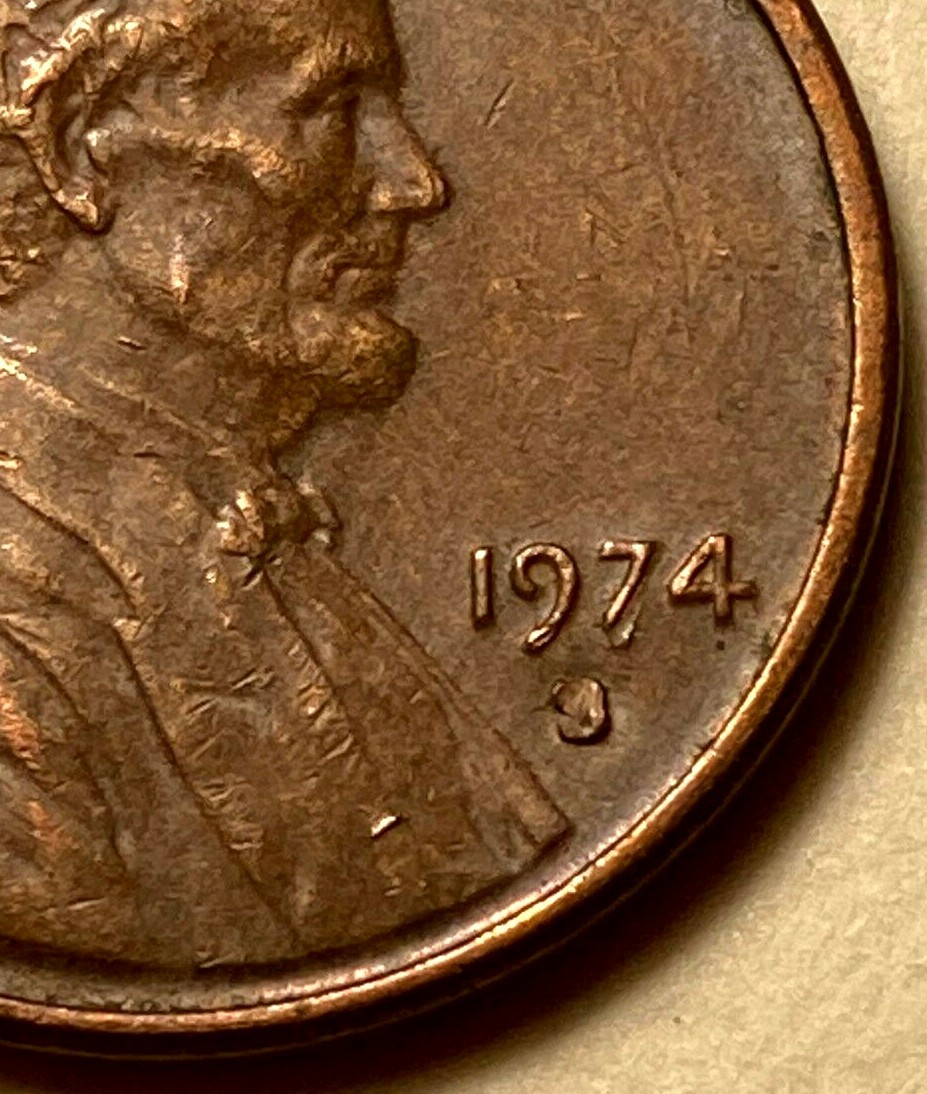
1. Doubled Die Obverse (DDO)
Doubled Die Obverse errors show doubling on the front of the coin, most commonly on "LIBERTY," "IN GOD WE TRUST," or the date "1974." This occurs during die-making when the hub impresses the design multiple times at slightly different angles. True DDO shows distinct notching or separation on letters and numbers — not the flat "shelf" of mechanical doubling, which has no collector value. Examine with at least 10× magnification and compare to CONECA-documented varieties. The most valuable examples show strong visible doubling on LIBERTY and the date.
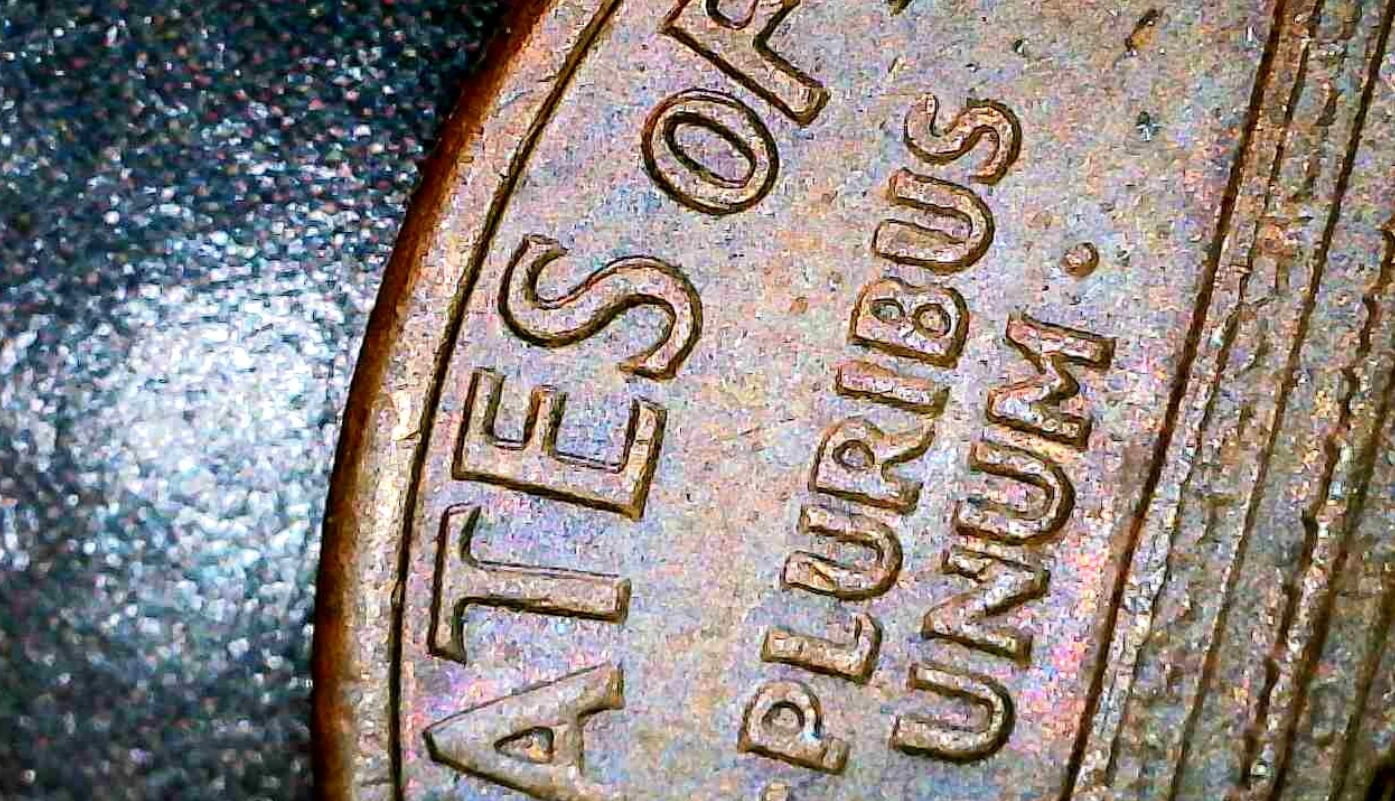
2. Doubled Die Reverse (DDR)
Doubled Die Reverse errors feature doubling on the back of the coin — most prominently on the Lincoln Memorial columns, "UNITED STATES OF AMERICA," "E PLURIBUS UNUM," or "ONE CENT." Focus examination on the Memorial's columns and stairs, where doubling creates overlapping parallel lines. The rounded letters O, C, and S in the inscriptions are the best places to spot clear notching. Strong DDR varieties show doubling visible without magnification — those are the most valuable.
3. Off-Center Strike Error
Off-center strikes result from a misaligned planchet during striking — the design shifts to one side and a crescent-shaped blank area appears opposite. Value is driven by two factors: percentage off-center (more = more valuable) and whether the date remains visible (essential for maximum value). A 50% off-center with a visible date beats a 75% off-center with no date. Minor 5–10% examples bring $10–$30; dramatic 40–50% specimens with the date intact can reach $150–$500 or more.
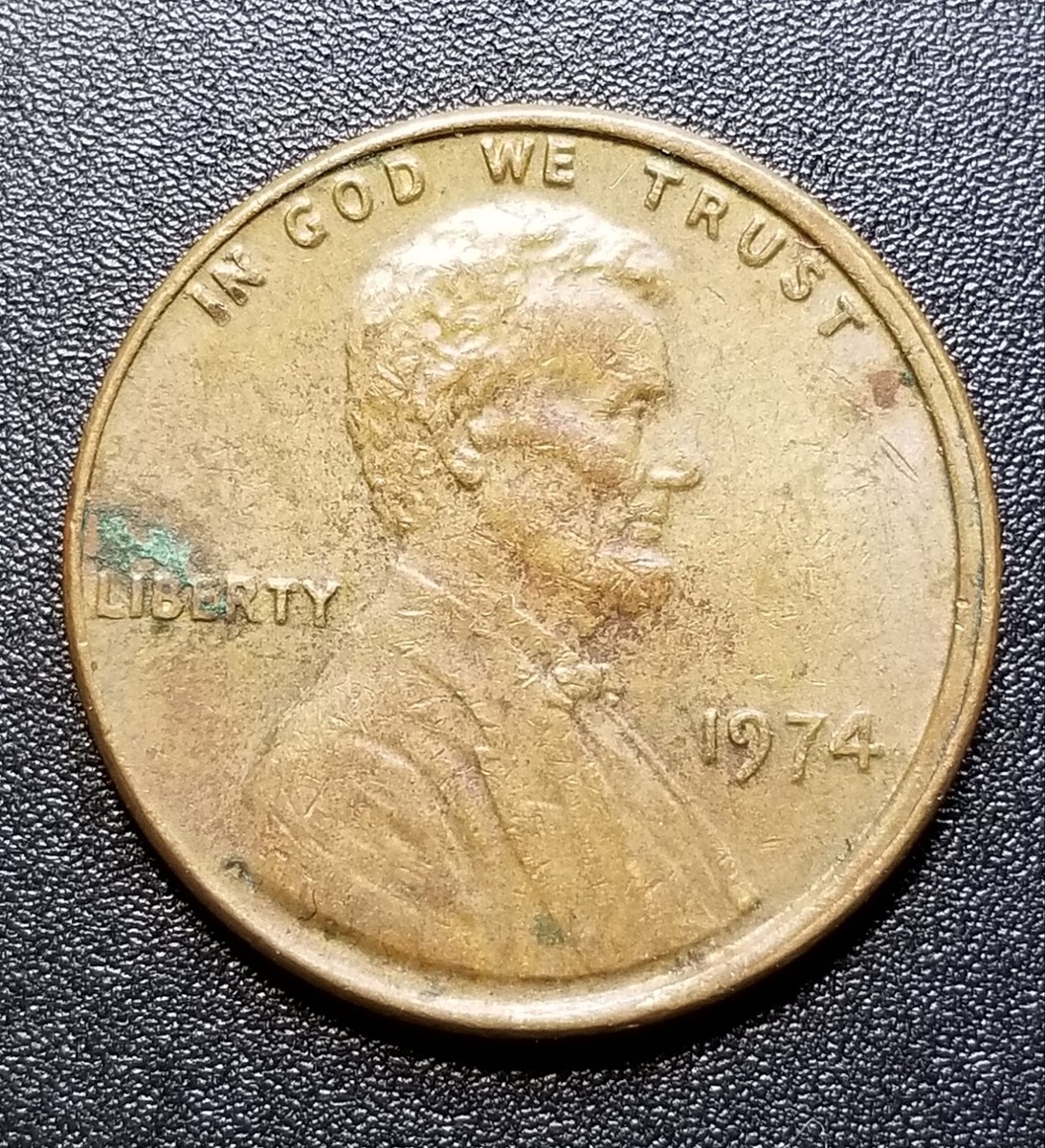
4. Die Crack Error
Die cracks appear as raised lines on the coin's surface — the opposite of a scratch, which is incised. They form from metal fatigue in the die after heavy use. Minor hairline cracks add modest value; major cracks crossing Lincoln's portrait or bisecting the design command higher premiums. The most valuable die crack errors are retained cuds — where a chunk of the die broke away entirely, leaving a raised blank area on the coin near the rim. One notable 1974 retained cud error has sold for approximately $9,000.
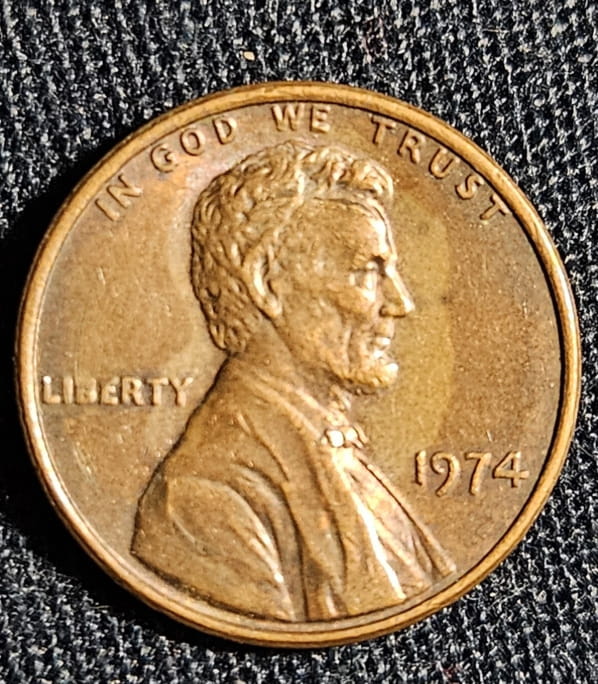
5. BIE Error
The BIE error is a specific die crack variety named for its location: a vertical raised line appears between the "B" and "E" in "LIBERTY," creating the visual illusion of spelling "LIBIRTY." It forms from a die crack developing through metal fatigue at that precise point. BIE errors are among the most popular entry-level error coins because they're easy to identify and explain. Strong, prominent examples are more valuable than weak ones. While common enough to find without extreme difficulty, a well-defined BIE on a bright uncirculated example is a satisfying find.
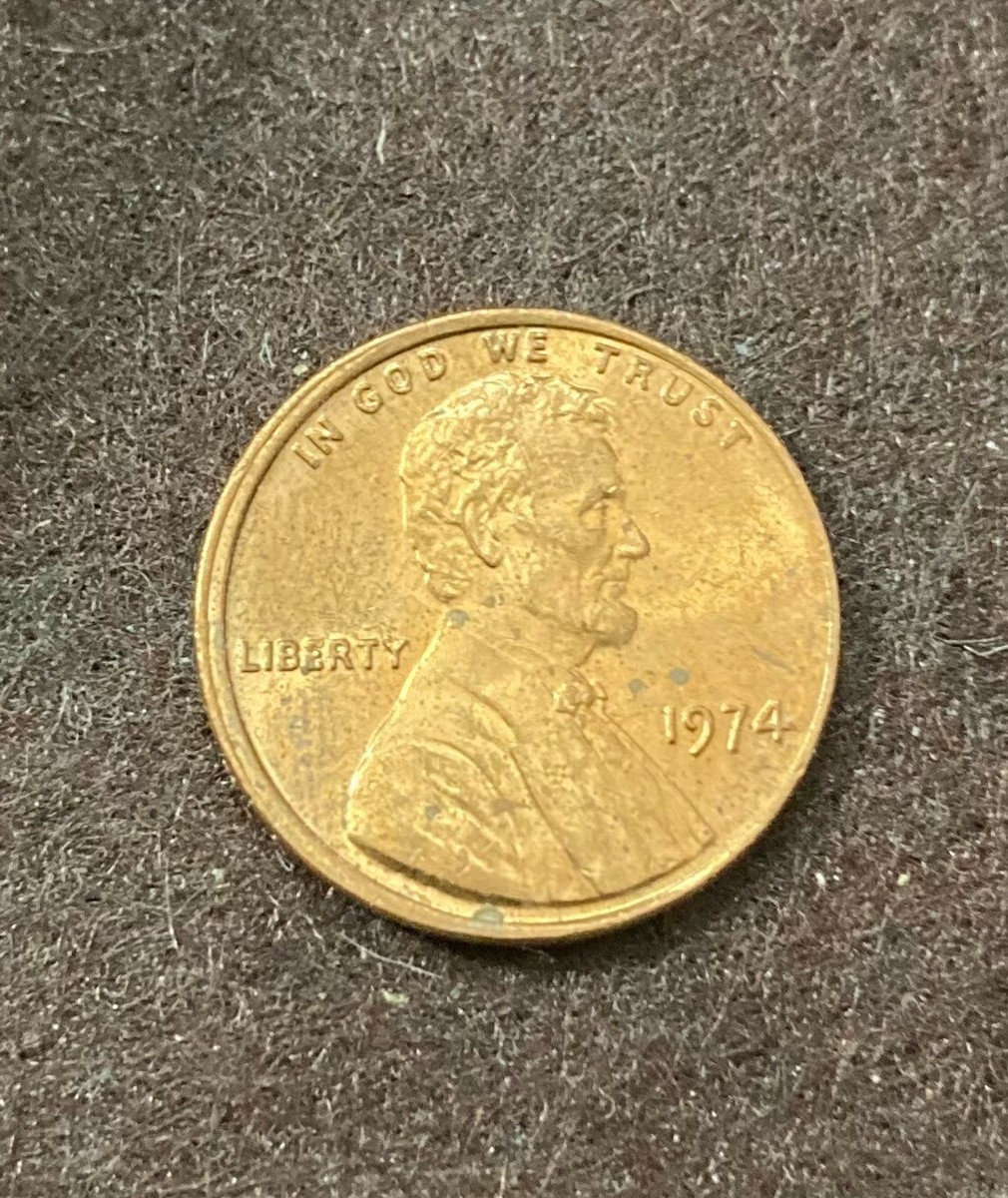
6. Clipped Planchet Error
Clipped planchet errors occur when the coin blank is incompletely punched from the metal strip during planchet production. Curved clips show an arc matching the circumference of an adjacent blank; straight clips show where the planchet overlapped the strip's edge. The rim must be weak or absent in the clipped area — that's the key authentication feature separating genuine clips from post-strike damage. Larger clips (as a percentage of the total coin) and rarer elliptical clips command higher premiums.
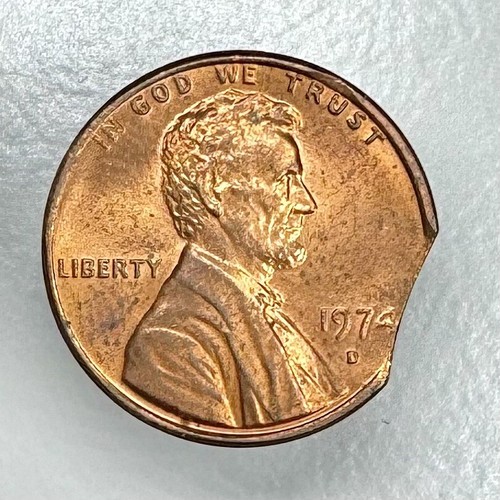
7. Strike Through Error
Strike through errors happen when foreign material — grease, cloth fiber, wire fragment, or another coin — gets trapped between the die and planchet during striking. The material leaves an area where the design is weakened, missing, or shows the texture of the intruding object. Grease fill-ins show mushy, indistinct details. Cloth strike-throughs show a woven fabric pattern impressed into the coin. Wire strike-throughs leave linear impressions. The most dramatic and valuable examples make clear what caused the error. Distinguish from post-mint damage: genuine strike-throughs show design weakened at surface level, not removed by abrasion.
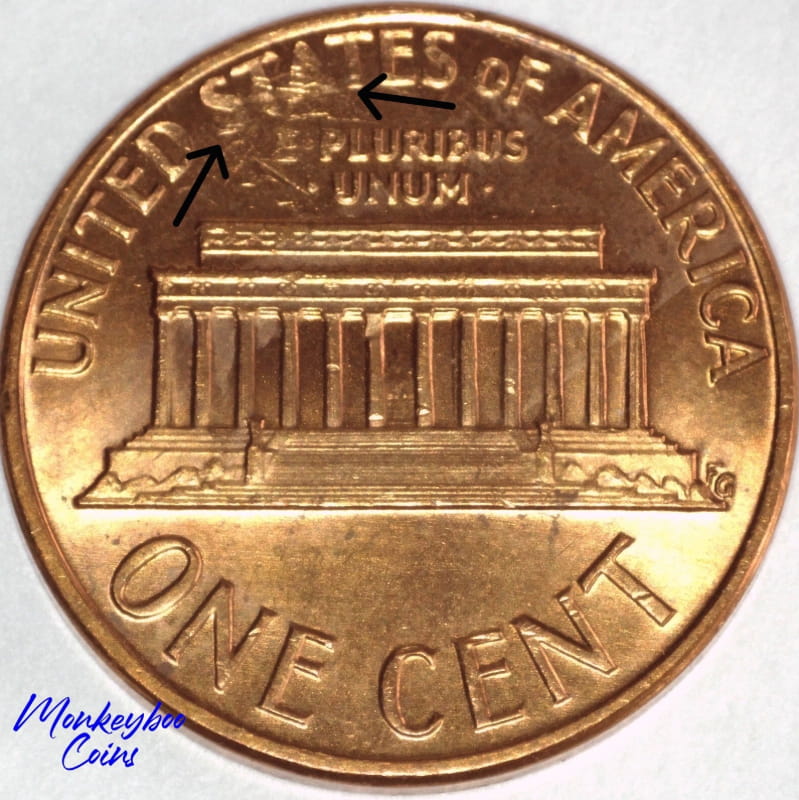
8. Repunched Mint Mark (RPM)
RPM errors occur on 1974-D pennies (Philadelphia has no mint mark, so RPM errors only affect Denver issues) when the "D" is punched into the working die more than once in slightly different positions. Use at least 10× magnification to examine the D mint mark below the date. Look for secondary outlines, notching, unusual thickness on one side, or a completely doubled D. The most dramatic examples show a clearly visible second or third D offset from the primary mark. Specific RPM varieties are cataloged and tracked by variety specialists — identifying your exact variety can significantly affect value.
9. Broadstrike Error
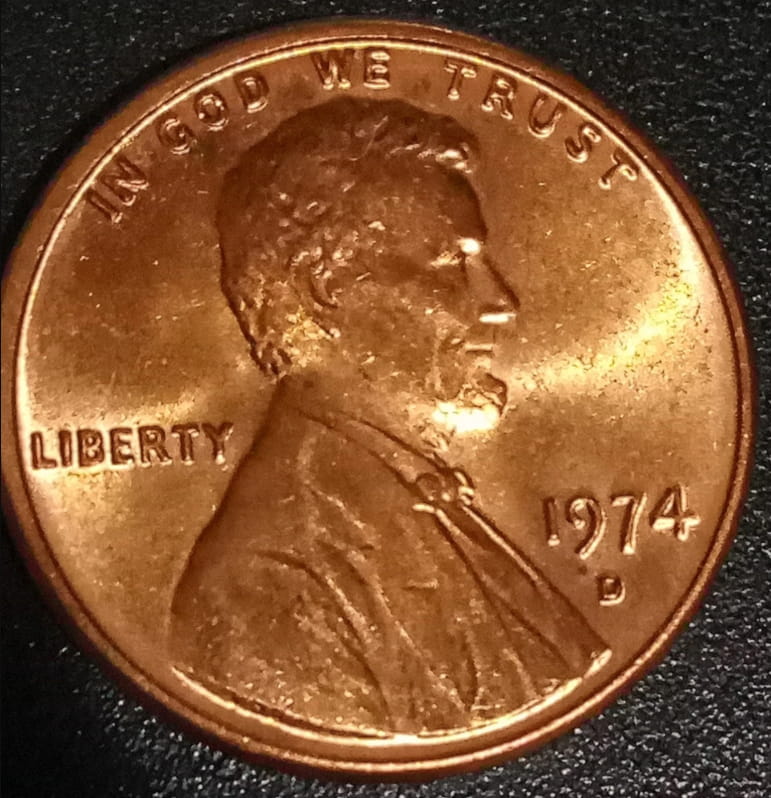
Broadstrike errors occur when the coin is struck outside the restraining collar that normally forms the rim and limits metal flow. The result is a penny larger than the standard 19mm diameter — typically 20–22mm — with no raised rim and a flat, irregular edge. The design elements appear slightly spread or elongated. Measure with calipers: a standard 1974 penny is 19mm; broadstrikes are visibly wider. The edge should be smooth and flat, not showing the typical raised rim. Some partial-collar broadstrikes have a weak rim on part of the coin. The coin will also appear slightly thinner than normal due to the metal spreading outward.
10. Wrong Planchet Error
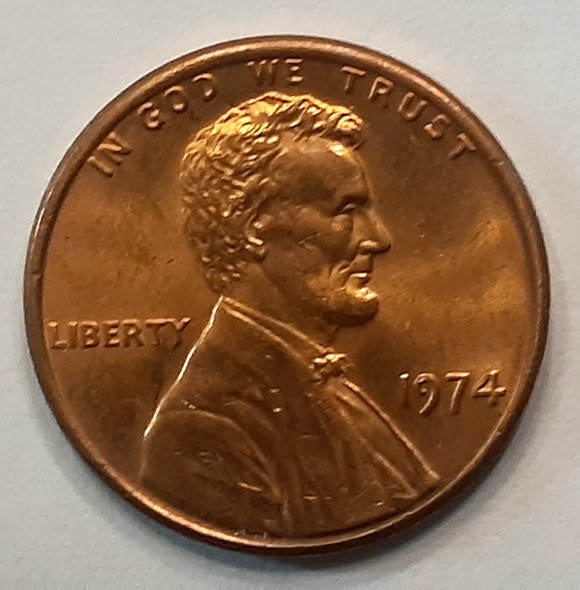
Wrong planchet errors occur when penny dies accidentally strike a blank intended for a different denomination. A 1974 penny struck on a dime planchet weighs approximately 2.27 grams (vs. the standard 3.11g) and measures 17.91mm (vs. 19mm). The design appears compressed at the edges. Some examples involve foreign coin blanks with weights that don't match any U.S. denomination. Use a precision scale and calipers for measurement. These errors are extremely rare and the existence of counterfeits makes professional authentication by PCGS or NGC essential before any sale. Also note silver dime planchet errors, which have occurred and can be identified by composition.
Real Money: Actual 1974 Penny Auction Results
Not theory. Real coins. Real dollars.
Table 6: Verified 1974 Penny Auction Results
| Coin Details | Venue | Sale Price | Why It Sold High |
|---|---|---|---|
| 1974-D MS-67+ RD | Heritage Auctions | $5,280 | Registry-quality grade — virtually no equals |
| 1974 (P) MS-67+ RD | Heritage Auctions | $4,320 | Superb gem — flawless full red surfaces |
| 1974-S Brockage / 1973-S Overstrike, MS-64 RB | Heritage Auctions, 2020 | $11,400 | Unique double-year error — extremely rare |
| Wrong Planchet Error (dime planchet) | Various | $200–$2,000+ | Rare planchet mismatch — authenticated by NGC/PCGS |
| Retained Cud Die Error | Various / TikTok referenced | ~$9,000 | Dramatic retained cud near rim |
| DDO Strong variety, circulated | eBay | $25–$200 | Visible doubling, documented variety |
"I found a 1974 penny that felt lighter than the others in my collection. Weighed it — 2.1 grams. Took it to a coin dealer. Turned out to be struck on a foreign planchet. PCGS authenticated it. Sold for over $800."
— r/coins community post, widely shared
Check Your 1974 Pennies with CoinKnow Coin Identifier App
The fastest way to know what you're holding — before calling an expert
Identifying a 1974 penny error used to require reference books, specialist forums, and a dealer's trained eye. Today, you can photograph your coin and get a preliminary identification in seconds. CoinKnow won't replace professional PCGS grading — but it'll tell you whether a coin is worth submitting, help you distinguish genuine DDO from mechanical doubling, and separate a real clipped planchet from a damaged edge, before investing in authentication fees.
Don't let valuable 1974 pennies disappear into circulation. Use the CoinKnow Coin Identifier app to scan any Lincoln cent and get instant identification, variety detection, and current market values.
CoinKnow — Coin Identifier
iOS & Android · The #1 Coin ID App for Lincoln Cent Error Collectors
Instant Recognition
Photograph your 1974 penny and receive immediate identification — mint mark, variety, error type, and estimated value in seconds.
Error Detection
Side-by-side comparisons help distinguish genuine doubled dies from mechanical doubling, real clipped planchets from damaged edges, and authentic errors from novelty coins.
Live Market Values
Access real-time pricing data based on recent auction results. Know what your 1974 penny error is worth before approaching dealers or submitting to grading services.
Download CoinKnow Free — Available on Both Platforms


📱 Pro Workflow: CoinKnow + Expert Grading
- Step 1: Weigh the coin — 3.11g = copper (normal). Under 1g = possibly aluminum (call an expert immediately)
- Step 2: Check the mint mark — D mint mark is the only one that can have RPM errors; S = San Francisco proof
- Step 3: Examine LIBERTY with a 10× loupe — look for BIE crack, DDO doubling, or any anomaly
- Step 4: Use CoinKnow to photograph and identify any error type and compare to documented varieties
- Step 5: Check reverse for DDR — Memorial columns and E PLURIBUS UNUM are the key areas
- Step 6: For any coin potentially worth $100+, submit to PCGS or NGC for professional authentication and grading
The Bottom Line: Your 1974 Penny Action Plan
Stop reading. Start checking.
Final Reality Check — 1974 Lincoln Memorial Penny
| If Your 1974 Penny Has… | It's Probably Worth… | Your Next Step |
|---|---|---|
| Circulated, no errors, any mint | $0.02–$0.10 | Save it — the copper is worth more than face value |
| Uncirculated, full red luster, MS-63–65 | $0.80–$8 | Store in a coin flip — modest collector interest |
| S mint mark (proof) | $4–$150 | Check grade — proof quality adds real value |
| BIE error (I between B and E) | $3–$20 | Entry-level collectible — fun find |
| Visible doubling on LIBERTY or date | $50–$300+ | Do NOT spend — use CoinKnow to ID variety |
| D mint mark with S traces visible | $200–$2,000 | D/S over-mintmark — authenticate immediately |
| Wrong weight / crescent blank / no rim 🔥 | $25–$2,000+ | DO NOT SPEND. Submit to PCGS or NGC now. |
| Silver/gray color, weighs under 1g 🚨 | ILLEGAL to own | Contact a numismatic attorney or PCGS immediately |
Your 5-Minute 1974 Penny Checklist:
- Weigh it first — 3.11g = normal copper. Under 1g = call an expert before touching it further
- Find the mint mark — below the date: blank = Philadelphia, D = Denver, S = San Francisco proof
- Check the D mint mark closely (if present) — look for S traces underneath = D/S over-mintmark
- Examine LIBERTY with a loupe — look for BIE crack and DDO doubling on letters and date
- Check the reverse Memorial columns — DDR doubling shows as parallel overlapping lines
- Use CoinKnow — instant identification, error detection, and current market values
- Submit to PCGS or NGC — for any coin potentially worth $100+, professional grading is essential
The 1974 Penny: Eight Billion Coins, One in a Million
The 1974 penny is simultaneously the most ordinary coin in American numismatics and the most extraordinary. With over 8.8 billion struck, you can find one in any change jar in the country. Most are worth 2 cents. But the doubled die errors, the D/S over-mintmarks, the wrong-planchet errors, and the legendary aluminum experimental cents scattered through that enormous mintage represent some of the most fascinating and valuable modern U.S. coins.
What makes 1974 penny collecting uniquely compelling is accessibility. These coins are still in circulation. Bank rolls, coin jars, inherited collections — they turn up everywhere. A 10× loupe, a jeweler's scale, and the knowledge of what to look for are all you need to sort the extraordinary from the ordinary.
"The 1974 penny is proof that the most valuable coins don't have to be old, silver, or rare dates. They just have to be different — wrong weight, doubled letters, shifted strike. The Mint made 8.8 billion opportunities to be wrong. A few of those mistakes are worth more than a house."
The penny in your pocket might be worth exactly one cent. Or it might be the $5,000 registry coin that spent decades in a coffee can. Check the weight. Check the mint mark. Check LIBERTY under a loupe. It takes three minutes and costs nothing.
Found a 1974 Penny Worth Checking?
Use CoinKnow for a quick ID, then get professional eyes on anything with unusual weight, doubling, or missing design elements.
Last updated: 2026 | Values based on PCGS CoinFacts, NGC Coin Explorer, Heritage Auctions, and eBay sold listings
Disclaimer: Coin values are estimates based on recent market data. Actual prices depend on individual coin condition, current demand, and auction timing. 1974 aluminum pennies are considered U.S. government property — consult legal counsel before handling any suspected specimens. Professional grading recommended for coins potentially worth $100+.